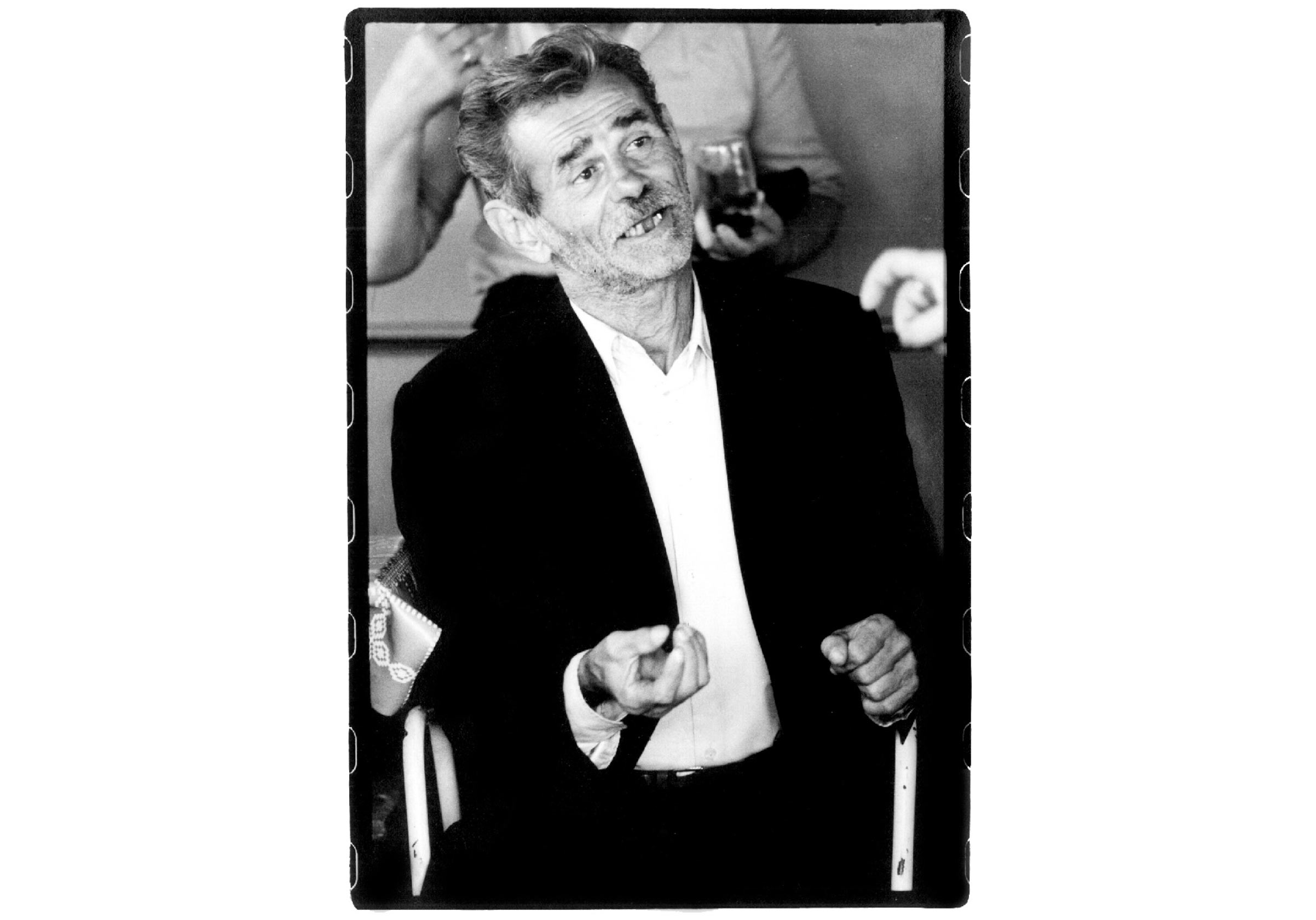
1982 - 1990
Darko Bavoljak began his photographic journey in the early 1980s. He first appeared publicly in 1983, a year before enrolling in the cinematography program at the Zagreb Academy of Drama, Film and Television. Even prior to his studies, working with analogue black-and-white photography (in keeping with the technological conditions of the time), Bavoljak demonstrated technical mastery of his chosen medium.
In selecting his subjects, he followed and shared the urban generational sensibility cultivated and developed in youth publications (Polet, Studentski list, etc.), where photography played a prominent role in the final layout and visual identity of the newspaper. Beyond serving as an illustration of text, photography functioned as an independent structural component, compatible with the textual content and an essential part of the overall feature.
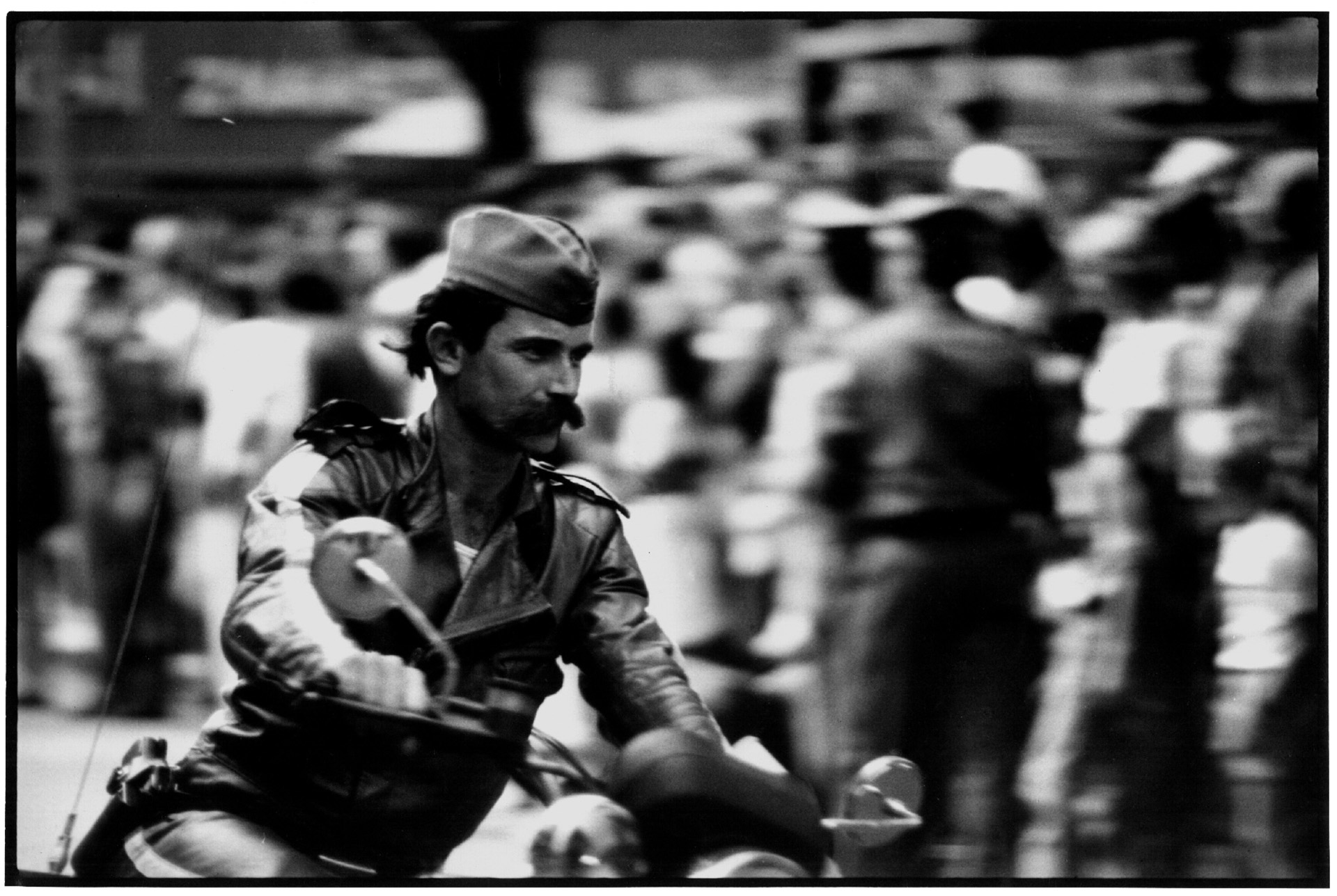
Bavoljak’s public activity began precisely in the youth press, more specifically in Polet. By chance, as the then graphic editor of the newspaper, I witnessed his first public step firsthand—I published his very first photograph. I included the work of the young twenty-two-year-old author, recognizing the freshness of his gaze and the dynamism of a motif extracted from the daily rhythm of the city.
As I recall, the image depicted a uniformed figure on a motorcycle, as if the photographer were riding alongside. The scene appeared to be captured in the same motion and speed: behind the sharply focused rider (the actual reason being a wide aperture), the background—a crowd at a parade, partly uniformed—was blurred and “spilled,” like an abstract, fluid, soft texture-composition, enhancing the sense of immersion and identification with the central figure.
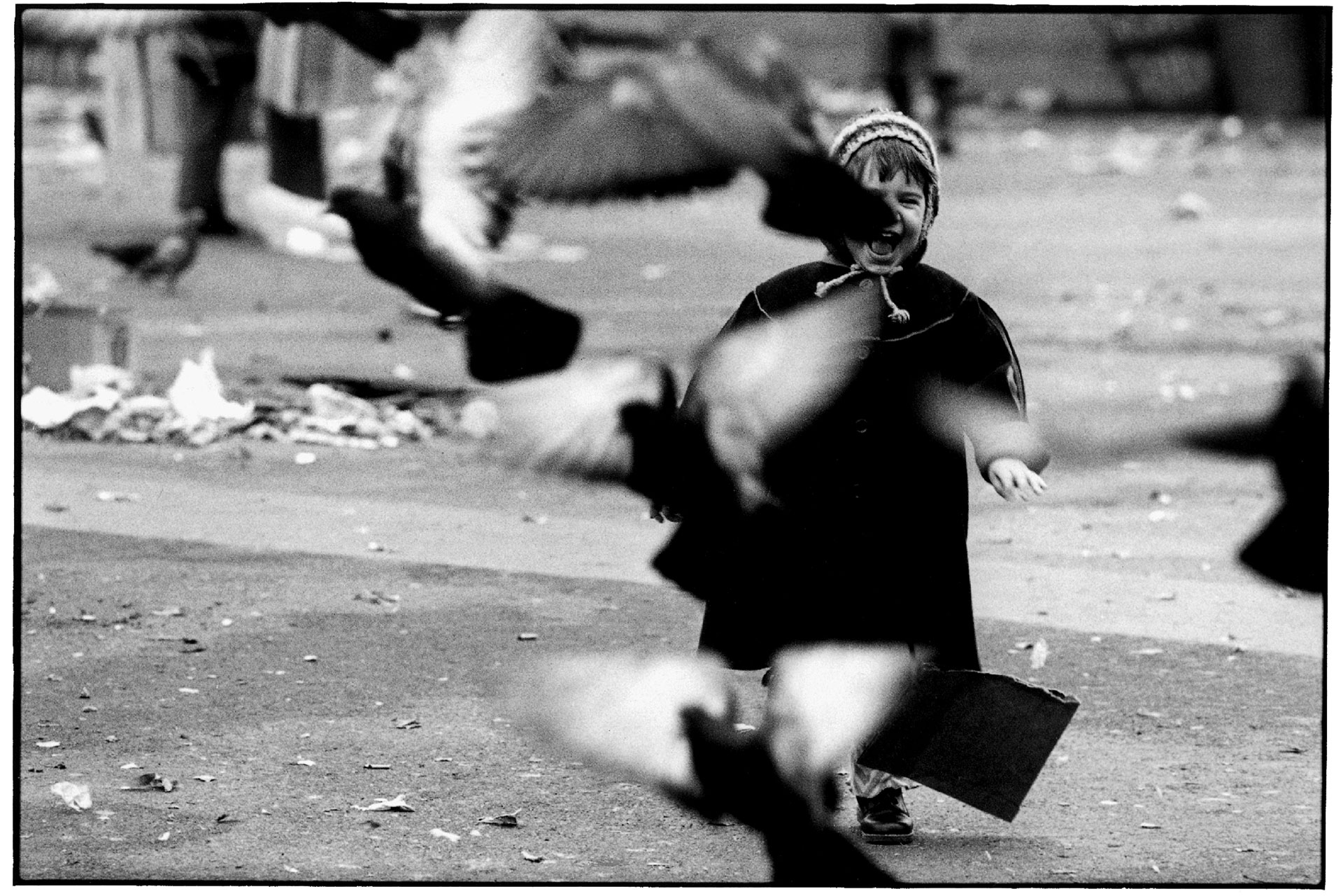
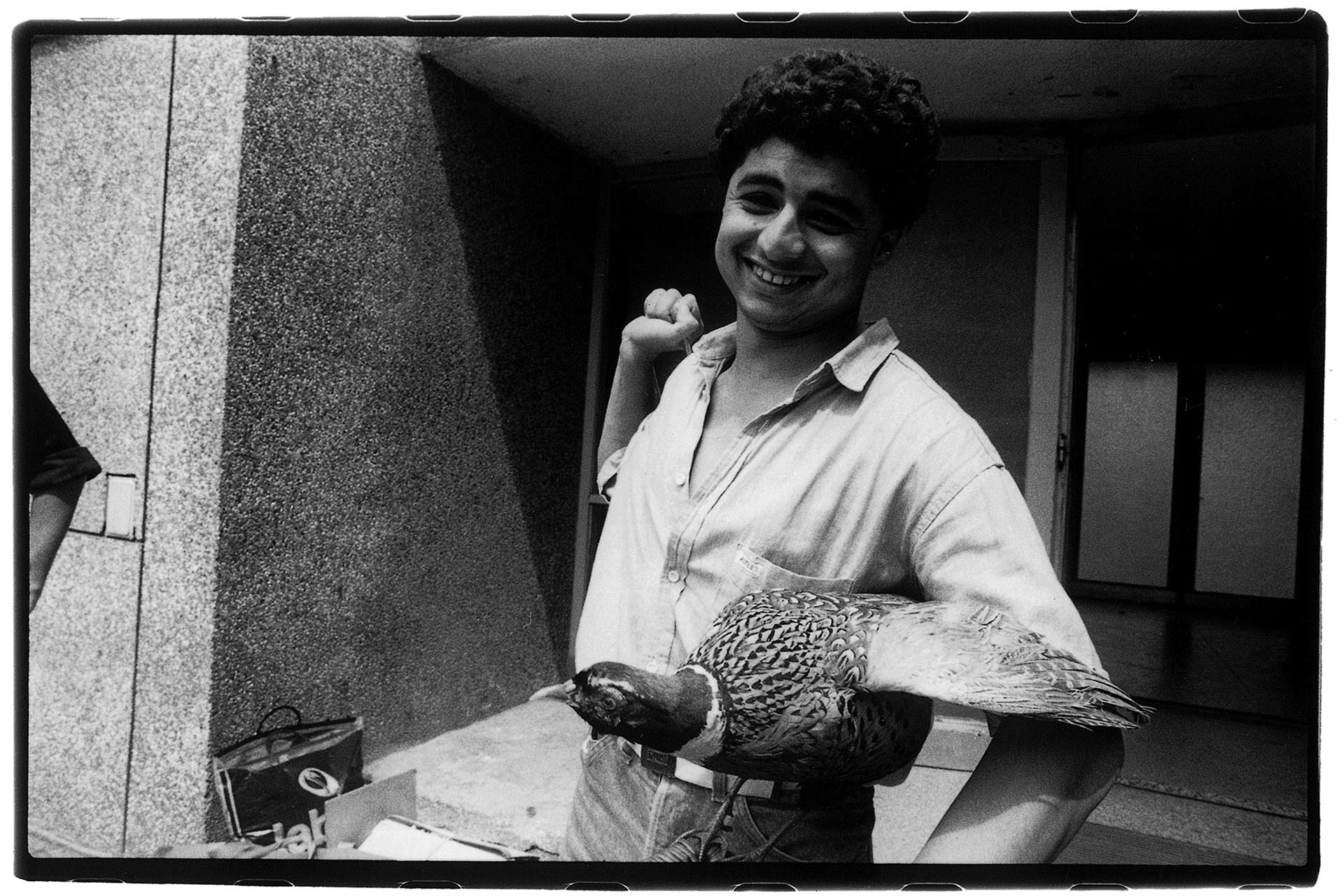
His photographs from this period share the vitality and curiosity of a contemporary generation of photographers who actively participate in everyday life as a fertile field of nuanced images, not necessarily standard newspaper sensation-illustrations. Such qualities are evident, for example, in Bavoljak’s photograph of a flock of pigeons just taking flight, appearing as blurred, scattered patches filling the foreground, while in the background a joyful boy is discernible, his face partially covered by a pigeon’s wing. The narrative is enriched by the viewer’s conclusion that the boy’s playful action caused the movement—the takeoff of the flock. Another photograph with a somewhat similar premise—its common denominator being the motif of man and bird—is entirely different in content and expression. This time, a smiling young man of exotic physiognomy is photographed with a larger, richly ornamented and colorful bird tucked under his armpit—certainly his pet, or perhaps a trained animal used to entertain audiences and earn money.
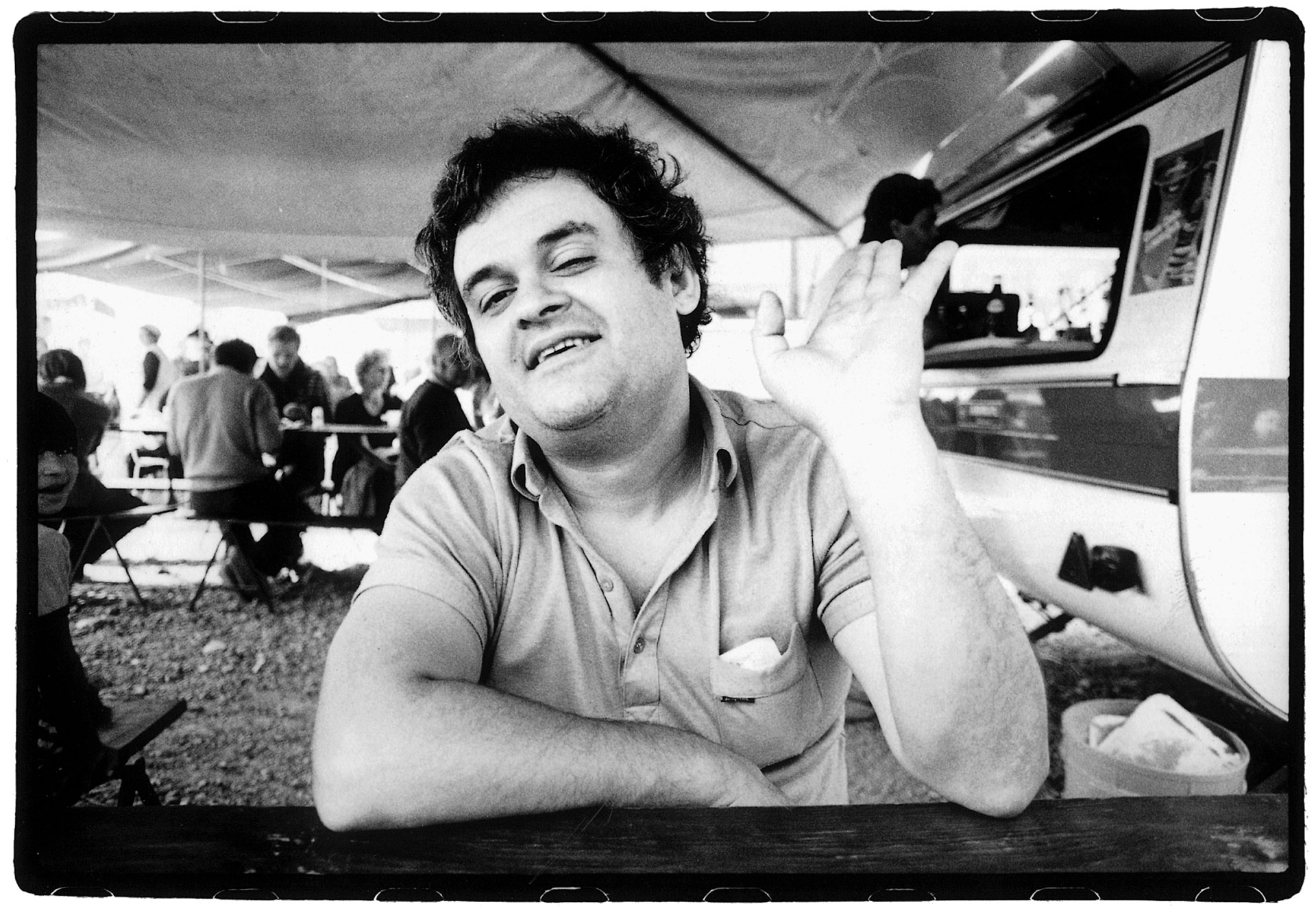
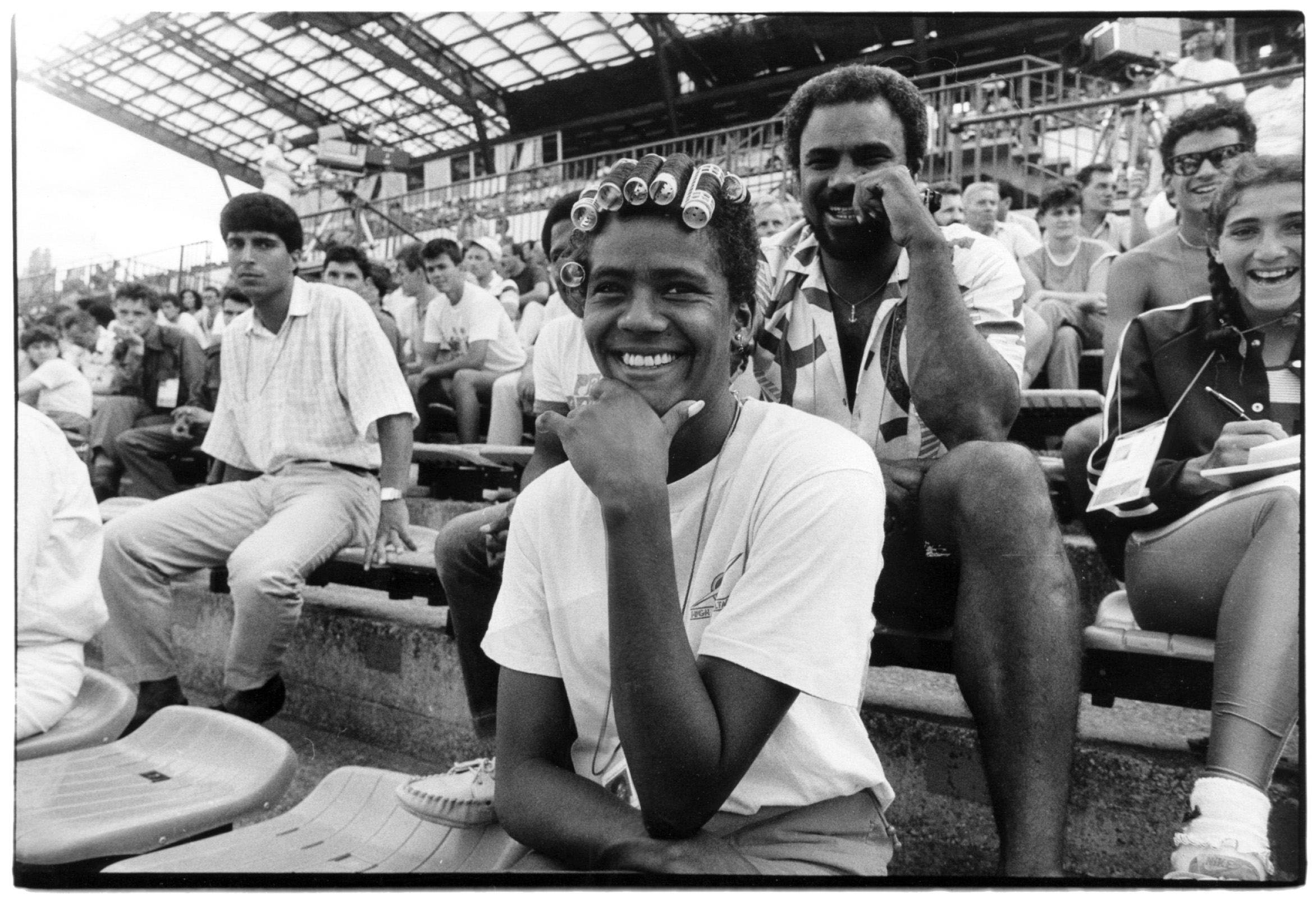
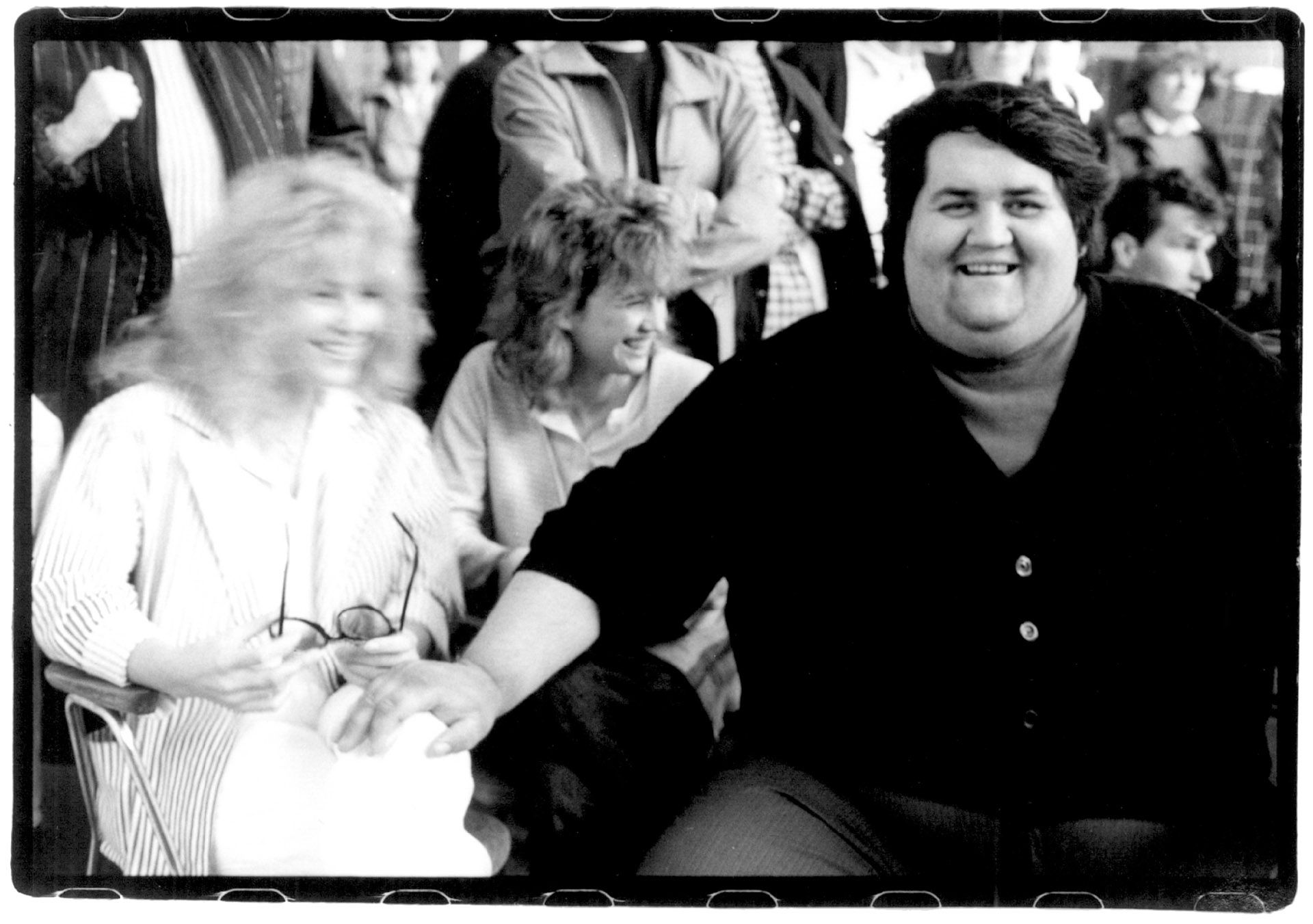
There is no doubt that the young photographer, in his desire to achieve an attractive product, resorted to scenes embodying visually striking and socially lavish occasions and events, counting on the cooperation of the people he photographed. They were aware of the camera and readily displayed their instant playful inclinations. Thus, from a larger group or audience at a public—certainly entertaining—event, he singled out an extremely corpulent young man who cheerfully and smilingly, in a direct en face pose, looks into the camera lens. With his face and dark clothing, he fills almost the entire right half of the frame, while the remainder is occupied by bright, smiling, pretty blond women and fragments of faces and figures from the background audience. Incidentally, although probably not taken for that purpose, the photograph served as an illustration for an article on student nutrition.
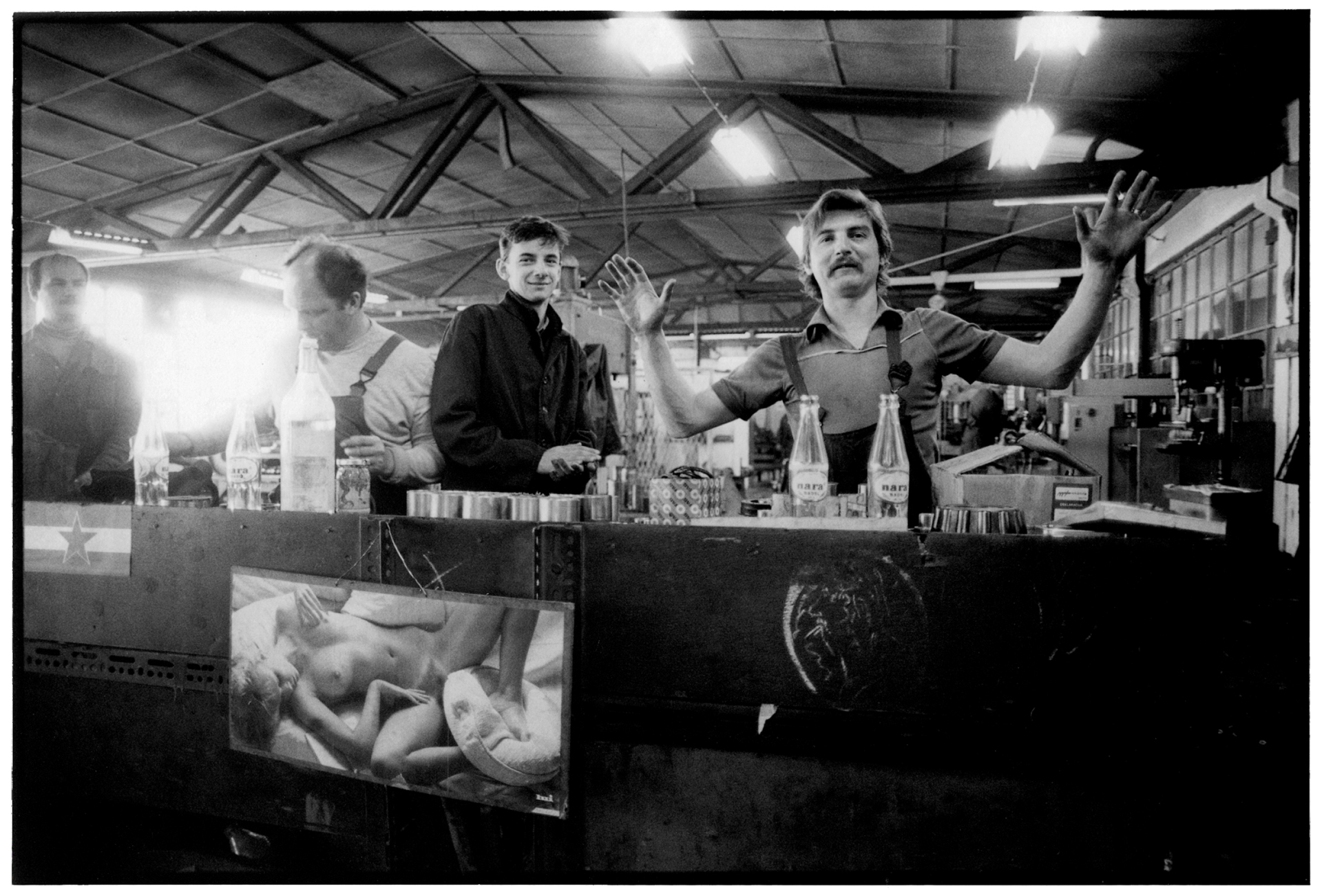
Similar scenes of individuals singled out from crowds or larger accidental groups recur in various versions—for example, the case of a young man behind a factory drinks counter, on which an erotic photograph of a female nude is affixed, while somewhat further away hangs the flag of the former state. With arms spread wide, the young man poses, approving the photographer’s “indiscreet” action.
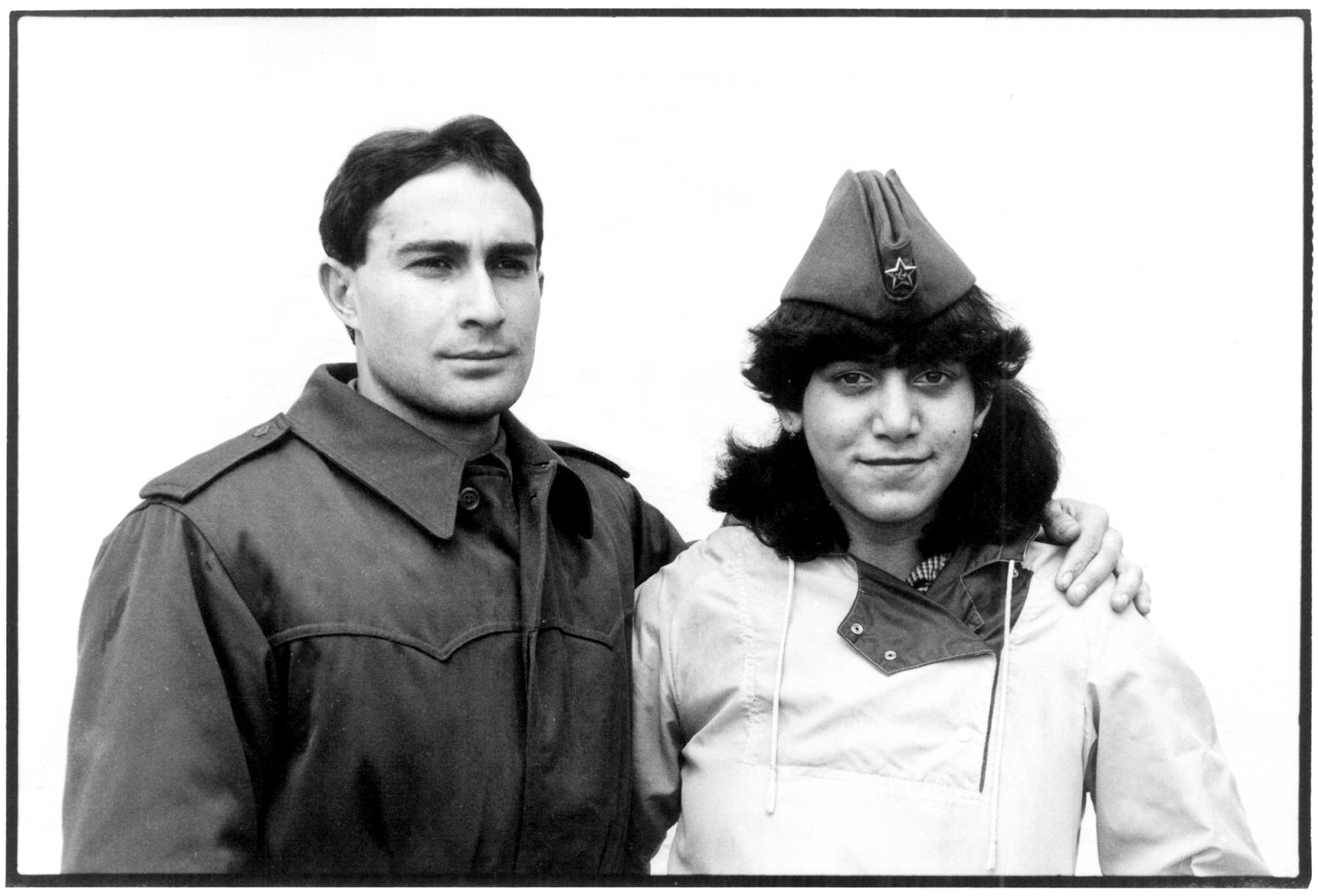
In the image of a young couple whose torsos fill the frame, the male is clearly a member of the military. The intrigue lies in the fact that the uniformed young man is bareheaded, while his cap—part of the uniform—has moved onto the girl’s head. It is unclear, and unimportant, whether the photographer was quick to register their playful game or whether the couple, in consenting to cooperate, performed an additional gesture to lend the act of photographing greater playfulness and joy.
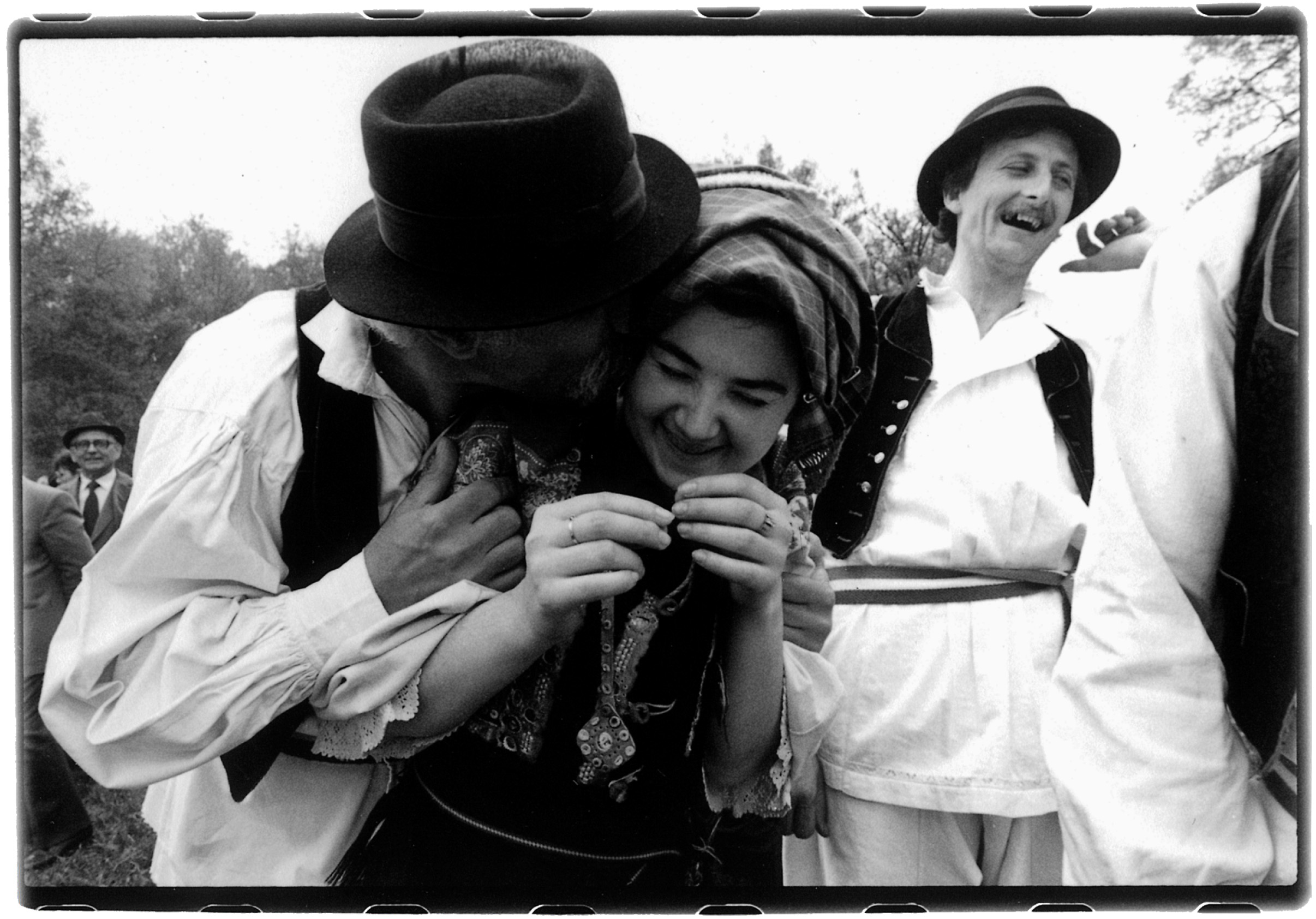
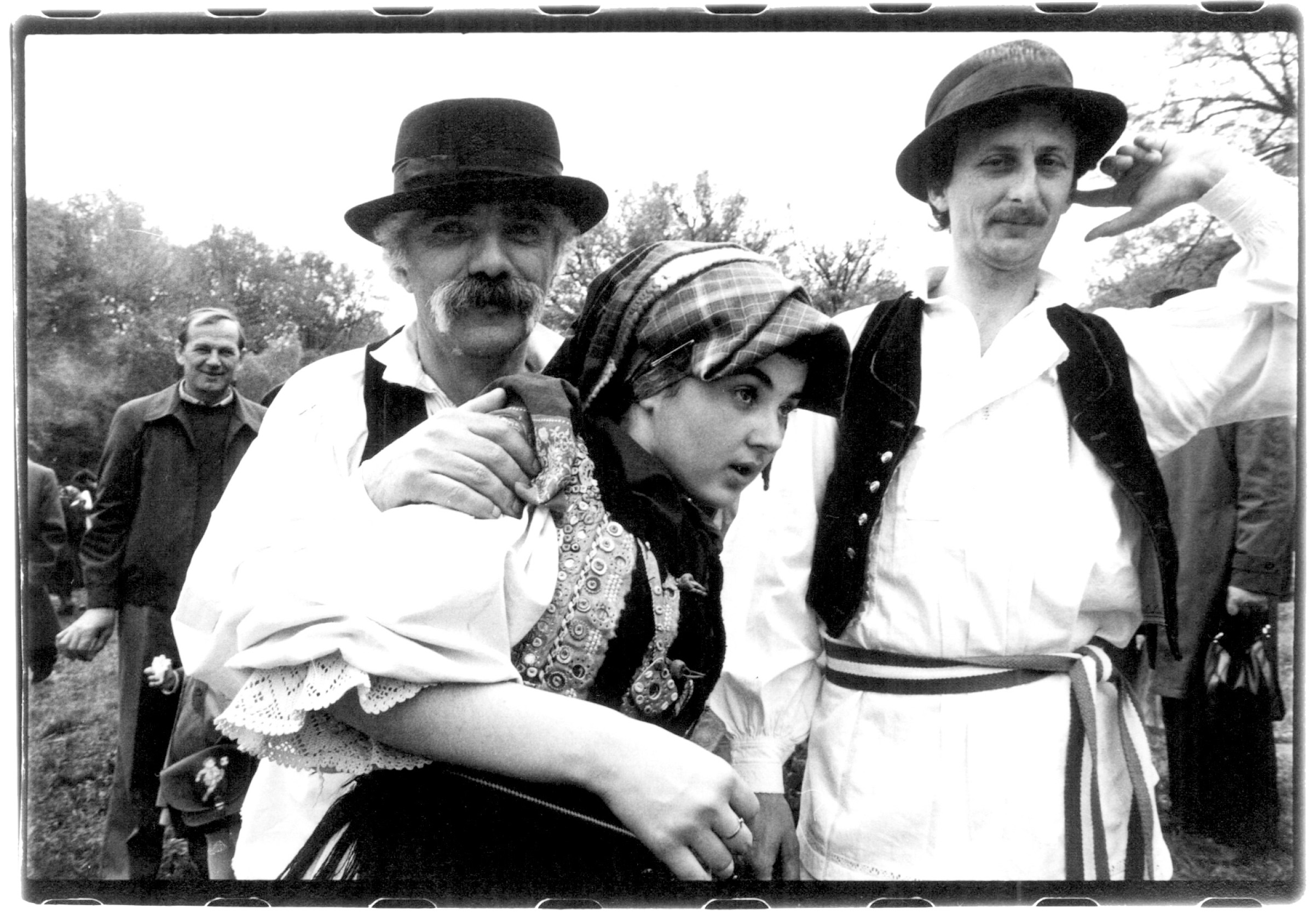
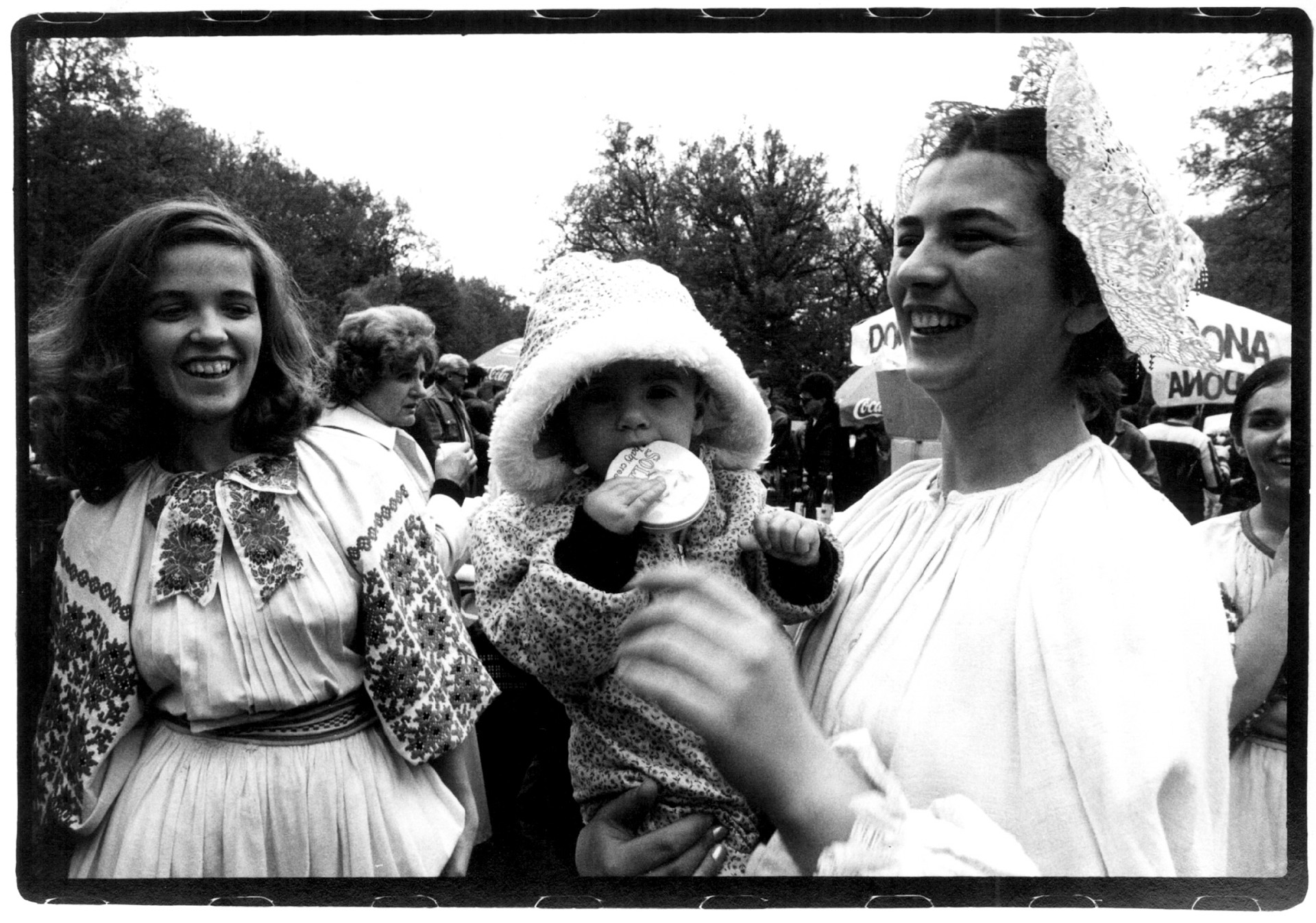
Formally no less intriguing is the recording of a figure who refuses to be photographed by hiding behind the palm of an upturned hand—especially since behind it a cheerful face is visible that seems merely to be playing at refusal and modesty. A similar spirit is found in scenes from folklorically inflected events, with their costumes and modes of socializing, which also abound in performative participation within the author’s documentary process.
In this sense, more naturalistic content also appears in the documentation of performances of newly composed folk music, when Bavoljak photographs a series of “explicit” scenes. These feature the lasciviousness of a “singer” who, completely uninhibited by her corpulent bodily habitus, provocatively exposes her thighs and crotch.
I mention all these scenes as examples of a young photographer’s striving to achieve attractive content while seeking his place within the context of the contemporary photographic and photojournalistic scene. The author’s later works and cycles, created after completing his studies—during the war-torn 1990s and thereafter, up to the present—assume a more consistent form and a more meditative content. This applies even to explicitly war-related motifs that Bavoljak photographed as a soldier, a member of the Company of Croatian Artists. Alongside correct utilitarian documentation of soldiers’ faces and the devastated cities and landscapes in which he found himself, these motifs in certain segments also contain studiousness and even multilayered semantic values. This is evident in his well-known cycle Future. Scenes of ruined buildings and the logo-inscriptions of the Pakrac–Lipik trading company of the same name function as a brutal emblem of (self-)denunciation of lies; as a sarcastic inversion of hopelessness realized by the very forces that had insistently promoted “the future” (along with terms from the same category, such as “youth,” “progress,” “unity,” etc.) as a projection of the idea of absolute happiness, a paradise on earth.
Alongside recently intensified exhibition activity, other photographic cycles have followed which, unlike the early ones, continue to cultivate a more reflective, studious approach. Such is, for example, the series of shop windows of abandoned stores and craft workshops, which—continuing the wartime theme—offers a bleak aesthetic of contemporary, peacetime entropy. In this way, he again shares contemporary tendencies, situating his work, as Iva Prosoli notes in her text on this cycle, “within a new photographic genre popular in recent years, known as ‘ruins photography’ or ‘ruin porn’…”
In addition to photography, Bavoljak is also known for his work in film and for demanding organizational and curatorial projects, such as the long-term project on Goli Otok, involving numerous collaborating authors.
The work of Darko Bavoljak is ongoing and continues without interruption. In the time ahead—in the future, therefore (hopefully one without quotation marks)—new, ambitious, and media-diverse achievements are expected, but above all those within his primary medium of photography.
Antun Maračić
Black-and-white photographs. Silver gelatin
Camera: Olympus OM-1n, OM-2n, OM-3, OM-4
Ownership: Author
Copyright © Darko Bavoljak 2025